One of the key aspects of LIFE BEEadapt was the creation of green infrastructure in the pilot areas, an action aimed at providing food for wild pollinating insects for as long as possible.
The green infrastructure was built following guidelines developed within an Abacus written by the project partners. These guidelines took into consideration several factors:
- The specific context (ecological and management) in which the intervention is being implemented (natural-semi-natural/rural/urban-periurban);
- Possible regulations, constraints, and management plans related to the presence of protected areas and Natura 2000 sites in the area;
- Management methods and their timelines;
- Biotic interactions and their relationship with management methods;
- Possible critical issues.
These guidelines cover various situations and needs, ranging from the plant species chosen to compose the green infrastructure to the territory in which it is being implemented, and finally the final objective of the intervention.

What are the types of green infrastructure?
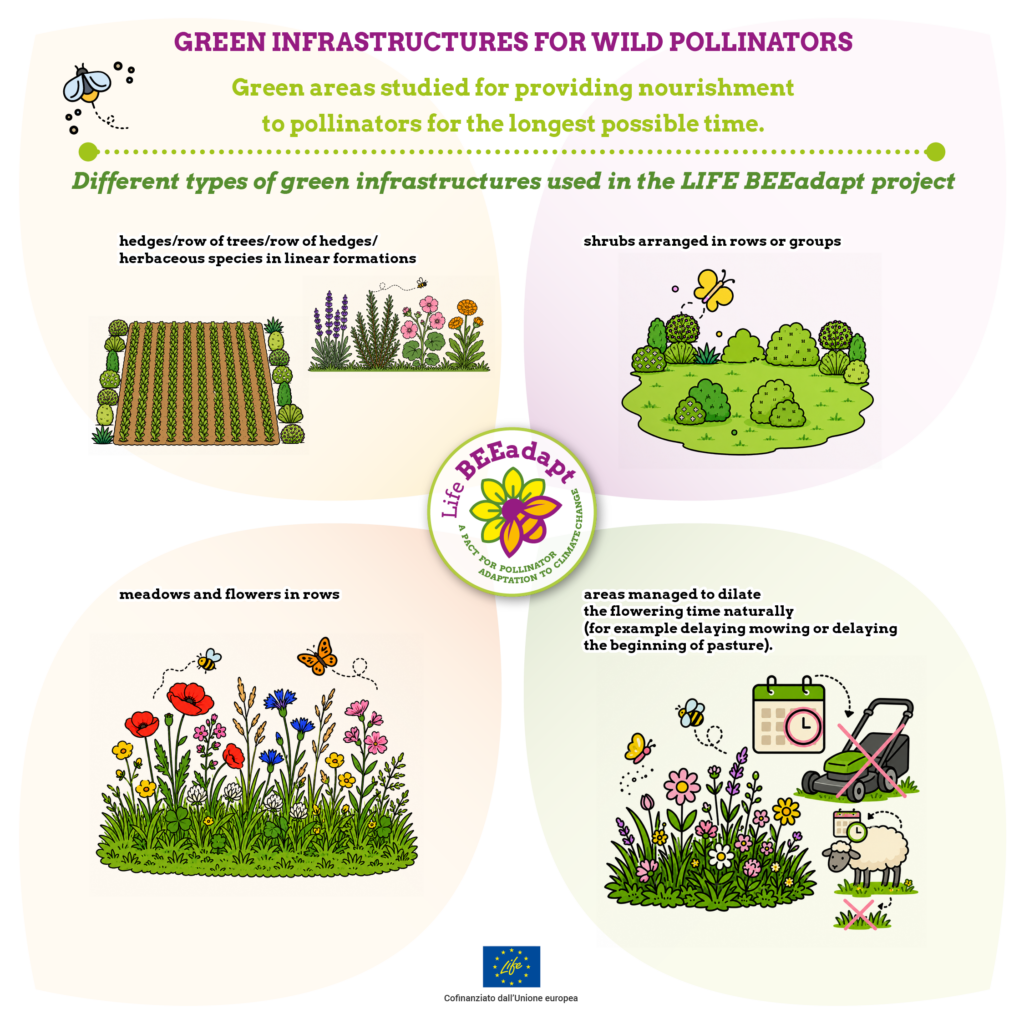
There are different types of green infrastructure. Those implemented in the LIFE BEEadapt project were:
How to choose the best plant species for green infrastructure?
The goal of green infrastructure is to provide food for pollinating insects, supporting their presence and reproduction in the area. Therefore, the selected species should:
- Be rich in pollen and/or nectar, with preference for those that produce both pollen and nectar (especially in autumn);
- Have abundant, long-lasting blooms, possibly repeated throughout the growing season;
- Have a flowering period that extends into the latter part of the growing season (summer or late summer-autumn flowering).

What are the factors that make green infrastructure effective?
– A high diversity of flowering species with abundant blooms, featuring flowers of different sizes, shapes, and colors;
– Inclusion of a similar number of species that not only meet the above criteria but also alternate flowering, ensuring a rich supply of nectar and pollen for pollinators for as long as possible;
– Inclusion of larval insect food species, thus encouraging population growth;
– Avoiding the use of herbicides, pesticides, and insecticides.