Friday, May 15 Press Release
Pollinators and Climate Change: Results of the LIFE BEEadapt Project Presented Today at Villa Celimontana
More than 100 trees, 7,000 shrubs and plants planted, 33 hectares of wildflower meadows, and 65 beehotels: small but significant changes to encourage the presence of pollinators
Over 500 stakeholders in three Italian regions are working together to develop climate change adaptation strategies for pollinators
Climate change is causing profound changes in the distribution of butterfly, bee, and other pollinator populations. Variations in temperature and precipitation are leading to more hostile survival conditions, impacting both pollinators’ physiology and their ability to find food sources, due to the disappearance of some plants or the disruption of their life cycles.
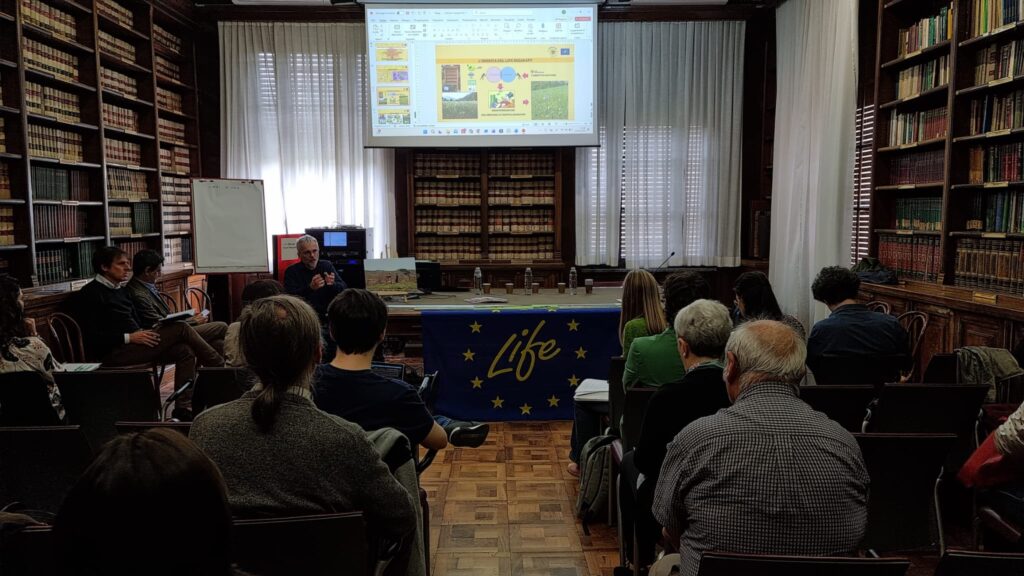
This was discussed this morning at Villa Celimontana, the Rome headquarters of CREA, during the final conference of the LIFE BEEadapt project, which presented the results achieved over four years of activity in five pilot areas across Lazio, Emilia-Romagna, and Marche.
Co-financed by the European LIFE program, BEEadapt was created to address a problem that has received insufficient attention: the impact of climate change on the conservation of wild pollinator populations.
Anthropogenic factors, such as soil degradation and consumption, or pesticide use, also increase the risk of survival and mortality of pollinators. Intervention in public and private areas is therefore essential to ensure small but significant changes that can favor the reproduction and nutrition of pollinators.
In the project’s five pilot areas—the Tuscan-Emilian Apennine National Park, the Torricchio Mountain Nature Reserve, the Municipality of Aprilia, the RomaNatura protected areas, and the Pontine Marshes—more than 100 trees and over 7,000 shrubs have been planted and replanted, approximately 33 hectares of wildflower meadows have been created, and approximately 20 hectares of meadows have been converted to delayed mowing. In addition to these actions, 65 beehotels and 160 pollinator shelters have been installed, and more than 400 habitat trees have been created. Over 500 local and national stakeholders were involved in various capacities in the project activities.
The aim of LIFE BEEadapt is to preserve and increase the ecological connectivity and habitat diversity of these insects at the national, regional, and local levels through the implementation of green infrastructure, such as those listed above, and the activation of a collaborative governance system. This means planning and implementing interventions aimed at promoting the presence of pollinating insects in urban, peri-urban, and rural contexts, and involving stakeholders at both the local and national levels.
<<We have addressed this complex issue—the impact of climate change on wild pollinators—through two distinct action tracks. Concrete actions, namely demonstration interventions carried out in an attempt to provide shelter and reproduction opportunities for wild insects, but also to increase food availability, especially during the critical phase, the second half of summer, when water begins to run low and flowers are no longer available to pollinating insects >> explains Willy Reggioni, project coordinator for the Tuscan-Emilian Apennines National Park. <<Another series of actions are focused on governance, namely tools designed to make interventions sustainable and their positive effects long-lasting>>.
Begun in 2022, the BEEadapt project involved nine partners coordinated by the Tuscan-Emilian Apennines National Park: the University of Camerino, the Foundation for Sustainable Development, the National Research Council – Institute for Bioeconomy, Confagricoltura Latina, the Department of Architecture at Roma Tre University, the RomaNatura organization, Legambiente, U-Space, and the Municipality of Aprilia.
In each pilot area, a Pact for the adaptation of pollinators to climate change has been created, a document that shares best practices, guidelines, and opportunities for collaboration between various organizations. In the five territories, over 160 entities have joined the Pact, both public and private agricultural companies and cooperatives, who have recognized the value of the project’s actions. The Pact is a tool that allows the implementation of the same interventions to be promoted even outside the project areas, in order to transfer and replicate the “BEEadapt model” in other contexts as well, to make the effect more sustainable over time.
Furthermore, 35 farms in the five areas have signed the Stewardship Agreement, committing to implementing concrete measures to conserve wild pollinators.
<<This project has demonstrated that taking action today to protect wild pollinators means strengthening the resilience of our ecosystems, landscapes, and agricultural systems in the face of the climate crisis,>> says Stefano Raimondi, Head of Legambiente’s Biodiversity Office.
<<The actions implemented—which strengthen habitats and reduce human pressure—are concrete examples of how it is possible to integrate biodiversity conservation, climate adaptation, sustainable land management, and the restoration of a fundamental component of terrestrial ecosystems: wild pollinators. In this sense, the experience gained also offers important insights for the implementation of the future National Restoration Plan envisaged by the Nature Restoration Law, which will require effective, coordinated, and measurable interventions capable of generating lasting benefits for nature and communities.>>
The impact of these actions on the territory is being assessed, in this final phase, through monitoring that examines both the socioeconomic aspects—how the project was received and whether it was integrated into the agricultural practices of the entrepreneurs to whom it was proposed—and the ecological aspects. Prior to the interventions, floristic and entomological monitoring was conducted in the area, which will now be repeated to assess the response of pollinating insects to the changes proposed by the project.
The theme of replicability is central to the BEEadapt project, one of its key achievements, and has been described in a specific Replicability Protocol. This Protocol is the final outcome of a process that includes a context analysis and the drafting of an agreement, similar to those already developed within BEEadapt, but adapted to the new context. LIFE BEEadapt has presented its Protocol to interested audiences over ten times. Of these ten occasions, five were transformed into a Memorandum of Understanding, a document signed between two of the project partners—the Tuscan-Emilian Apennine National Park and the University of Camerino—and other implementing bodies outside the target areas, such as the Alto Molise Biosphere Reserve, which shared its experience today.
The morning presentations included not only the results achieved in recent years, but also the next steps, the final ones before the project’s closure at the end of August, and, above all, the synergies built both within the partnership and with projects co-financed by the same LIFE program: LIFE Pollinetwork, LIFE+ A_GreeNet, and BuzzLife. Carmen Gangale, National Contact Point at the Ministry of the Environment and Energy Security, will represent the program in the afternoon round table.